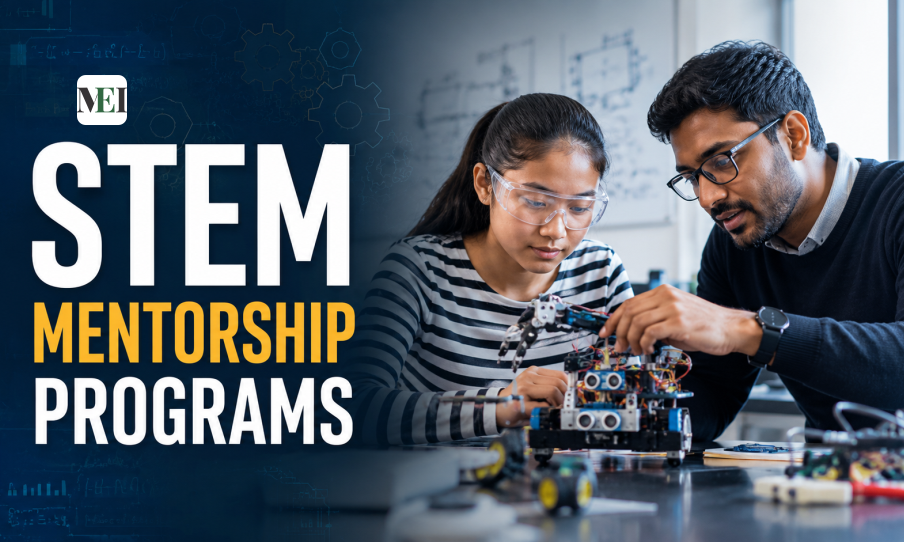
The current situation in education and career development is constantly changing and putting the accent on science, technology, and mathematics. The job market requires a broader range of specialists than ever before, and many students are not ready to meet these challenges. This is why stem mentorship programs are an integral part of education, as they help students realize their potential, shorten the distance to highly qualified and in-demand professions, remove psychological barriers, and contribute to overcoming difficulties on the career path. An understanding of the benefits of such a far-reaching partnership will highlight why stem mentorship has become so essential to today’s technology-savvy world.
The Benefits of Mentorship in the Study of Technical Fields
For many students, the path of technical education seems to be complicated enough, and they may need professional support and understanding. High competition, associated challenges, and the perception of further studies as something incredibly difficult can discourage any aspiring student at the beginning of the way. Thus, stem mentorship programs, when introduced to high schools and universities, provide learners with additional support and serve as a safe haven where they can find answers to their questions and receive advice concerning their areas of study. In addition, such programs are beneficial because they allow the mentor to guide and encourage the protégé and introduce the latter to the intricacies of the profession so that he or she can achieve academic success despite challenges and competition.
Furthermore, stem mentorship programs may be extremely relevant and helpful when it comes to developing soft skills, including communication techniques, professional behavior patterns, and much more. Ongoing mentoring and counseling within the framework of such initiatives allow the learner to acquire new qualities related to the profession, thereby laying the foundation for a successful career. It is crucial to note that when students receive inspiration and support from a professional mentor and learn to apply the knowledge gained, their understanding of things essential for their further development is improved, and their path to a specific career is much clearer.
Breaking Barriers and Cultivating True Workplace Diversity
Historically, technical fields have struggled with a severe lack of diversity, frequently leaving women and underrepresented minorities without visible role models in leadership positions. Active stem mentorship programs serve as a powerful catalyst for cultural change by intentionally connecting marginalized students with established professionals who share similar backgrounds or experiences. Seeing someone who looks like them succeeding in a high-tech career fundamentally alters a student’s perception of what is possible, effectively dismantling the pervasive imposter syndrome that keeps many brilliant minds away from technical disciplines.
When organizations prioritize inclusive stem mentorship programs, they actively contribute to a more equitable and innovative future. Diversity is not just a metric to be fulfilled; it is a critical driver of creative problem-solving and comprehensive technological advancement. Mentors involved in these initiatives help underrepresented students build robust professional networks, secure competitive internships, and navigate the unspoken cultural nuances of corporate and academic environments. By democratizing access to crucial industry connections, these structured initiatives ensure that the tech leaders of tomorrow reflect the rich diversity of the global community.
Fostering Vital Connections Between Academia and Industry
One of the most persistent challenges in modern technical education is the noticeable disconnect between classroom theories and the rapid, everyday realities of the professional workforce. Educational institutions often struggle to update their curricula fast enough to keep pace with cutting-edge industry trends, leaving recent graduates feeling underprepared for their first jobs. Robust stem mentorship programs effectively bridge this widening gap by bringing real-world relevance directly into the learning process. Mentors can introduce their mentees to the latest software, emerging methodologies, and current market demands that are rarely covered in standard textbooks.
This direct line of communication benefits the corporate world just as much as it assists the student. Companies that sponsor or participate in stem mentorship programs gain early access to a pool of highly motivated, pre-vetted talent while gaining fresh perspectives from the younger generation. It transforms the recruitment pipeline from a transactional hiring process into a meaningful, long-term talent cultivation strategy. By aligning educational outcomes with actual industry needs, these programs ensure that the transition from a university student to a productive, confident professional is as seamless and efficient as possible.
The Lifelong Impact of Paying Innovation Forward
The true value of comprehensive stem mentorship programs extends far beyond the duration of a specific academic semester or a single corporate calendar year. The unique bond formed between a mentor and a mentee often evolves into a lifelong professional alliance, creating a sustainable cycle of growth and mutual support. As mentees advance in their careers and achieve their goals, they frequently return to these very same networks to serve as mentors themselves, inspired by the profound guidance they once received. This self-sustaining cycle guarantees that the collective knowledge of the industry is continually preserved, enriched, and passed down to future generations.
In an era defined by rapid automation and unprecedented technological disruption, the human element of guidance remains irreplaceable. Investing time, energy, and resources into stem mentorship programs is ultimately an investment in our collective future global infrastructure. By nurturing curiosity, building resilience, and fostering cross-generational collaboration, these programs ensure that the global workforce remains highly skilled, deeply empathetic, and fully prepared to tackle the complex challenges of tomorrow. Collaborative learning models remind us that the greatest technological breakthroughs are rarely achieved in isolation, but are instead built upon a solid foundation of shared knowledge, steady encouragement, and enduring human connection.