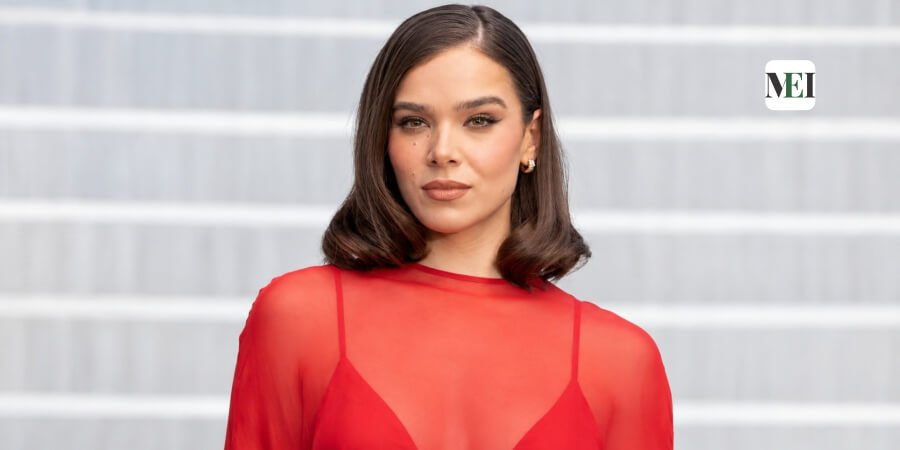
Hailee Steinfeld has fashioned a career that defies all attempts at categorization. She made her debut as a child actress when she garnered an Oscar nomination while playing Mattie Ross in True Grit. Over the years, she switched from acting to singing and from performing in minor roles to leading parts in major franchises while acting as a producer as well as voice actor. Her career journey is interesting not because of the many fields she has already tasted but rather because of how these different experiences are slowly starting to merge.
Hailee Steinfeld created a career that can be characterized by the close relationship between music and film. She has already appeared in some of the most popular TV shows and movies, including Dickinson, Hawkeye, Arcane, Spider-Man: Across the Spider-Verse and Ryan Coogler’s Sinners as a producer and performer.
Acting Was the Foundation, Not the Boundary
Hailee Steinfeld’s young career could have jailed her into the world of serious dramatic acting as her early performance at the age of 13 earned her an Oscar for Best Supporting Actress nomination, giving her a sense of belonging among experienced artists. However, instead of sticking to one specific channel, Steinfeld participated in movies of various styles including Romeo & Juliet, The Homesman, Pitch Perfect 2, The Edge of Seventeen, and Bumblebee.
This variance showcased her special skills of comfortable work with any genre of art. She showed herself as able to move from any genre to another including the period drama genre, comedy, and coming-of-age stories. For instance, in Bumblebee Steinfeld performed the role of Charlie Watson, while in The Edge of Seventeen, she played in a serious role of a characterization-focused movie.
Furthermore, she had her share of success in television. In Dickinson Hailee Steinfeld played the poet Emily Dickinson and worked as a producer as well. The Apple TV+ show was released in three seasons and won a Peabody award in the year 2020.
Music Gave Her Another Creative Language
Although many people might think of music as a side venture for Hailee Steinfeld, it became an integral part of her brand after she launched Haiz in 2016 and released the follow-up, Half Written Story, in 2020. The records allowed her to utilize a different kind of emotional storytelling than she did on the screen and proved to be an exciting exploration of this genre of art.
In particular, the 2020 EP provided a lot of insight into how Steinfeld came to her artistic decisions. She often claimed that playing Emily Dickinson influenced her songs, and after the shooting of the first season of Dickinson, she began writing songs that were a part of Half Written Story.
The bond between acting and music is one of the hallmarks of Hailee Steinfeld’s career.
Her 2022 single “Coast,” featuring Anderson .Paak, represented another shift. Steinfeld explained that she had moved away from the heavier emotional territory of Half Written Story and wanted to create something more expansive, connected to California and the musical influences she grew up around. GRAMMY.com described the project as a deliberate attempt to create a broader artistic world around her music.
Producing Changed Her Position Behind the Camera
The production aspect of Hailee Steinfeld’s career brings in another dimension to it as it modifies her connection with a project. Acting makes one accountable for a character. Production provides a person with authority over the more extensive creative scope surrounding that character.
The executive producer credit in Dickinson is the most vivid illustration of this. She was not only acting in the series as Emily Dickinson, but she was involved in the production that transformed the life of the poet and gave it a contemporary interpretation, combining historical facts with modern language, music, and visual means of expression. Other entries in her credits on imdb.com include producing the music video for “Coast” and the short film Asteroid in 2025.
This evolution is important since it shows an artist who becomes more and more interested in the creation of a project rather than in the role she plays in it.
Franchise Roles Expanded Her Reach
Voice acting and big entertainment franchises represent other major parts in Hailee Steinfeld’s career. She played Gwen Stacy in Spider-Man: Into the Spider-Verse and participated in the sequel Spider-Man: Across the Spider-Verse. Hailee Steinfeld also became Kate Bishop in Hawkeye and appeared as this character in future projects in the Marvel Cinematic Universe.
These kinds of roles provide her with a different type of acting experience. In voice acting, some visual tools available in live action cannot be applied, while in the case of superhero franchises, actors need to stick to both the characters that they portray in the universe and the previous mythology.
Moreover, her role as Vi in the animated series Arcane for Netflix has given her experience of performing a character that has emotional depth.
Recently, she has also selected other movies that show her versatility. In Sinners, a movie by Ryan Coogler that releases in 2025, with Michael B. Jordan as the leading actor, Steinfeld plays the role of Mary, a character from the 1930 Mississippi where ethnicity and music represent the main topics of the story. She also contributed the song “Dangerous” to the film’s soundtrack, creating another direct connection between her acting and music careers.
A Career Becoming More Self-Directed
What is amazing about Hailee Steinfeld is her transition from a performing artist to a creative entity. Acting is still her main area of work but having a career in music allowed her to find herself, producing enabled her to get behind the camera, and providing her voice made it possible to act without the need to move.
Another very important point is that versatility brings benefits too. An actor who can make use of various skills can go far in the entertainment industry as he/she can take part in different creative processes as well as help others with their work.
In fact, the best thing about Hailee Steinfeld is the absence of static playing slots in her career. She has already passed from being a child film star to a singer, executive producer, franchise performer, and leading actress in a movie. Her achievements show that she is focused not just on getting credits, but also on having more power over the process of storytelling. As those interests continue to overlap, her career increasingly looks less like a collection of separate entertainment jobs and more like the work of an artist building several creative identities at once.