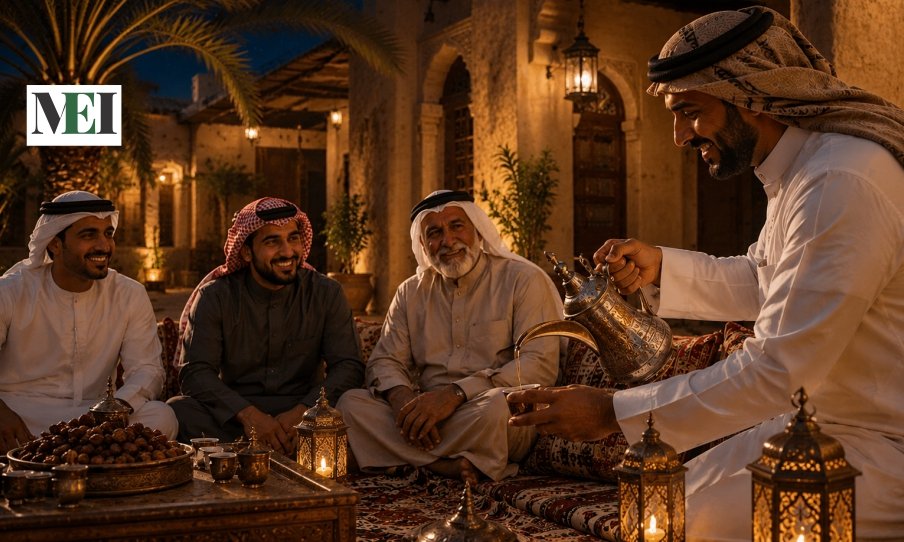
Out here, where sand meets sky, people learn early how guests are treated – like gifts dropped by fate. Long before cities rose, tribes crossed empty lands, relying on strangers’ kindness just to live through the night. That old way of staying alive slowly shaped something richer: a rhythm of giving without asking why. This spirit became the foundation of arab hospitality culture. Step inside any home now, even one high above street level with glass walls and quiet lights, and you’ll still feel that same pull of welcome. A plate appears. Tea pours. Words move slow, full of care. This isn’t performance. It runs deep, older than borders, tied to pride and silent promises made long ago. Strangers become part of the moment, held close, never hurried away. Across generations, hospitality culture continues to define how warmth and respect are expressed.
The Sacred Way of Greeting the Visitor
Right there in the middle of it all sits an old way people live by, one that shows exactly how hosts take care of guests who show up out of nowhere. Back then, someone walking miles could just tap on a tent flap and get a place to rest, something warm to eat, also safety for three full sunrises – no need to say who they were or why they came. Because of this strong belief, whoever steps into a home among these communities gets greeted like someone rare and honored. The family inside often brings forward whatever good thing they have, sometimes going hungry themselves so the guest eats better. Step close and notice – the smell of slow-burning wood chips curling through space, cushions lined just right along low tables – all small choices made quiet purpose, each meant to let strangers breathe easy, like they belong. These gestures are at the heart of arab hospitality culture, where dignity and generosity walk side by side. Even today, hospitality culture reflects the same deep respect for visitors that existed centuries ago.
The Art of Coffee Meets Quiet Kindness
A sip of time moves slow when Gahwa arrives in Arab gatherings. Not just drink – it’s presence, gesture, shared silence made warm. From a curved pot, often gleaming, comes liquid laced with cardamom’s whisper. Left hand guides the pour, right offers the cup – small, thin-rimmed, no handle to hold tight. One third filled on purpose: heat fades fast, talk lasts longer. Fullness would mean hurry; emptiness means stay. Each round passes like breath between friends. Out comes the bitter coffee, served beside small bowls full of soft, sugary dates. A quiet mix of tastes sits on the tongue, much like two thoughts fitting together without words. Taking the cup means stepping into calm air, where no promises need signing. The moment unfolds before speech arrives, threads already tied between one who offers and one who receives. In many homes, arab hospitality culture is best understood through these quiet coffee rituals. The elegance of arab hospitality culture often reveals itself in silence rather than extravagance.
Culinary Feasts as Expressions of Honor
When it comes to dining, the concept of moderation is happily cast aside in favor of abundance. Food is the ultimate medium through which a family expresses its joy at your presence. Traditional meals are served on massive, communal platters piled high with fragrant, spiced rice and tender slow-roasted meats like lamb or chicken, a presentation designed to bring people together in a shared sensory experience. Guests are continually urged to eat more, with the host often hand-selecting the finest, most tender cuts of meat to place directly onto the visitor’s plate. Leaving a small amount of food on the platter is a subtle sign of appreciation, signaling to the host that their incredible generosity has completely satisfied the gathering. Through these meals, arab hospitality culture transforms food into a language of affection and honor. The richness of arab hospitality culture can often be tasted before it is ever spoken about openly.
Adapting Ancient Customs to a Modern World
While the landscapes of the Middle East have transformed dramatically into global hubs of commerce and tourism, the spirit of arab hospitality culture has seamlessly adapted to the contemporary era. Modern luxury hotels, bustling corporate boardrooms, and international diplomatic gatherings across the region still operate on these exact same ancient principles. Technology and architecture may change, but the genuine desire to connect, protect, and honor the guest remains a steadfast pillar of daily life. For any traveler, experiencing this unparalleled warmth firsthand is not just a lesson in tradition, but a beautiful reminder of our shared humanity. Even in modern cities filled with innovation, arab hospitality culture continues to preserve emotional connection and human warmth. The timeless values behind arab hospitality culture ensure that every guest feels remembered long after the visit ends.