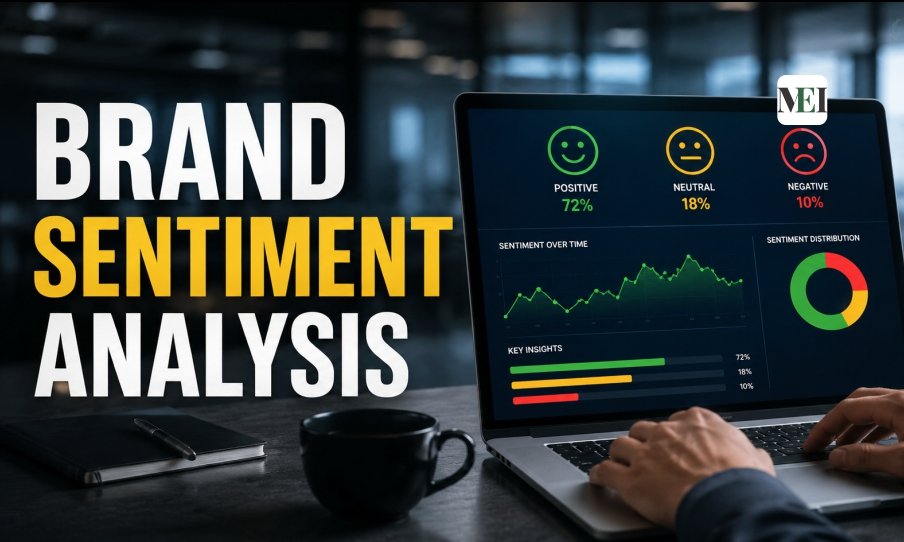
In a competitive digital environment, the opinion of customers and what they choose to purchase are equally valuable. People share their concerns, preferences, and viewpoints about a brand on various social media networks, review sites, forums, through surveys, online articles, and blogs. All that data is useful in determining the general attitude toward the company, whether it is positive, negative, or neutral.
Brand sentiment definition and its role in analyzing feedback
Brand sentiment analysis is crucial for understanding what people think and say about a company. Instead of sifting through hundreds or thousands of comments and reviews, one can track and analyze the sentiment expressed in them to get a clear idea of customers’ impressions and opinions.
Understanding customer perception beyond likes and dislikes
Customer feedback is never as simple as a like or dislike. People often mask their feelings with sarcasm or compare the company with competitors. In a single text, people can write both positive and negative things, so most traditional feedback tools are not advanced enough to assess their statements correctly. Brand sentiment analysis has a solution to that problem. It allows scanning through all customer communications to sort them into positive, negative, and neutral categories and discover themes that resonate with the audience the most.
For example, customers may praise a company’s product quality but complain about slow delivery. Looking only at an overall rating could hide this distinction. Sentiment-focused analysis can reveal that customers are satisfied with the product itself but unhappy with the purchasing experience. Such insights give companies a much clearer understanding of what needs attention.
Turning Online Conversations Into Business Insights
The internet has transformed customers into active participants in brand communication. A product launch can generate thousands of comments within hours, while a service failure can become a trending topic almost instantly. Businesses therefore need more than traditional surveys to understand changing public opinion.
Brand sentiment analysis allows companies to monitor conversations across multiple digital channels and identify shifts in perception. A sudden increase in negative comments may indicate a product issue, customer service problem, controversial campaign, or misunderstanding that requires immediate attention.
Positive sentiment can also provide valuable information. When customers repeatedly praise a particular feature, employee, campaign, or service experience, businesses can identify what is working well and potentially use those strengths in future marketing strategies.
The real advantage comes from observing sentiment over time. A single negative comment may not mean much, but a consistent decline in positive opinions could signal a larger problem. Similarly, an increase in favorable discussions after a product improvement can demonstrate whether a particular strategy is producing the desired outcome.
Improving Marketing, Customer Service, and Reputation
Customer perception influences purchasing decisions, loyalty, recommendations, and long-term reputation. Businesses that understand these perceptions can make more informed decisions about their marketing and customer experience strategies.
Brand sentiment analysis can help marketing teams evaluate how audiences respond to advertisements, campaigns, product announcements, and social media content. If a campaign receives significant attention but generates mostly negative reactions, marketers can investigate what went wrong instead of assuming that high engagement automatically means success.
Customer service teams can also benefit from these insights. Repeated negative sentiment surrounding delivery delays, refunds, technical problems, or communication issues can reveal areas where operational improvements are needed. Instead of waiting for customers to submit formal complaints, companies can identify emerging frustrations through public conversations.
Reputation management is another important application. Organizations can track how public perception changes following major announcements, business decisions, or unexpected incidents. Early awareness gives communication teams an opportunity to respond before a small issue develops into a much larger reputation problem.
Using Technology to Make Better Decisions
The growing volume of digital conversations makes manual monitoring increasingly impractical. Artificial intelligence and natural language processing have made it possible to process enormous quantities of unstructured information quickly. These technologies can recognize patterns in language and categorize customer opinions at a scale that would be difficult for human teams to achieve alone.
However, businesses should not treat automated results as the complete picture. Language can be complicated, particularly when customers use sarcasm, slang, cultural references, or industry-specific terminology. A system may correctly identify that a comment is negative without fully understanding why the customer feels that way.
For this reason, the most effective approach combines automated analysis with human interpretation. Technology can identify patterns and prioritize important conversations, while experienced teams can examine context and decide what action should follow.
When implemented thoughtfully, brand sentiment analysis becomes more than a monitoring tool. It can become an important part of a company’s decision-making process. Businesses can use customer opinions to refine products, improve experiences, develop stronger marketing campaigns, and respond to reputational challenges more effectively.
Ultimately, customers are constantly communicating what they expect from the brands they interact with. The companies that listen carefully are better positioned to understand those expectations and respond before competitors do. In a marketplace where reputation can change with a single viral post, understanding public perception is no longer optional. It is becoming a fundamental part of building and maintaining a successful brand.