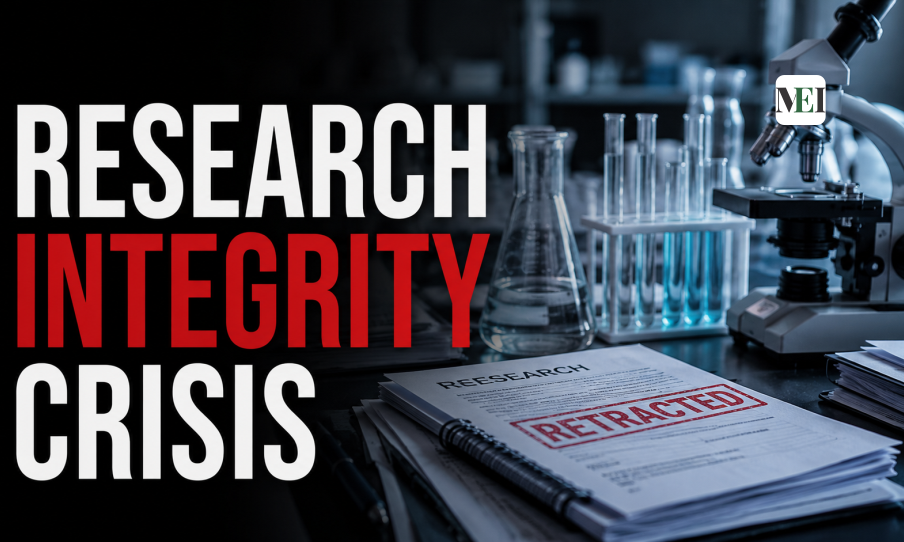
Right now, a hush runs through labs and universities – something’s off about what we believe to be fact. People used to think studies were solid, locked down by careful checks before ever being printed. Trouble is, behind closed doors, shortcuts grow common. Pressure builds from grants, careers hanging on output, pushing some toward shaky choices. Journals once stood like vaults of proof; lately they hold more cracks than expected. When results matter more than rigor, mistakes slip in – or worse, get planted. Because of this, confidence wobbles. Fixing it means tracing back – not just to who publishes, but why they publish that way. The system rewards speed, not care. Slow truths rarely make headlines. So the cycle spins: chase attention, skip reflection. What counts as evidence might need redefining.
The Hidden Forces Behind Scientific Wrongdoing
Deep inside today’s research troubles sits a pushy workplace mindset often called publish or perish. Careers climb when scholars churn out papers year after year, because promotions, money for labs, and respect follow output like shadows. With jobs hanging on constant publishing, cutting corners or tweaking numbers becomes more likely – this pressure feeds much of what’s wrong now. Scientists face tough spots where careful work clashes with flashy findings that elite journals chase instead. Speed wins while depth loses ground. One result? The whole system bends toward volume, not truth.
The strain on peer review grows heavier as the flood of new studies keeps rising, deepening problems in trustworthy science. Most people checking others’ work do so without pay, juggling heavy loads of their own projects and classes. These worn-out researchers face near-impossible odds when asked to spot clever faking or quiet number tricks buried in data. So errors – sometimes outright lies – sneak into journals, adding fuel to an ongoing trust breakdown. When false findings get printed, they spread like weeds, dragging honest investigators into chasing outcomes built on nothing at all.
The Economic Machine and Paper Mills
The commercialization of academic publishing has introduced even more sinister elements into the ongoing research integrity crisis. In recent years, investigative journalists and data sleuths have exposed the existence of industrial-scale paper mills. These dark-market organizations manufacture fake scientific papers and sell authorship slots to desperate researchers looking to pad their resumes. The proliferation of these mills has weaponized the research integrity crisis, flooding specialized journals with completely artificial data that looks legitimate at a glance. Because these operations use advanced software to generate unique but meaningless datasets, traditional plagiarism tools completely fail to detect them.
This commercialized fraud highlights a systemic blind spot in how journals operate, dragging the scientific community deeper into the research integrity crisis. Major publishing houses profit immensely from author processing fees, creating a financial conflict of interest that can discourage overly strict gatekeeping. When volume generates profit, the motivation to slow down the assembly line and scrutinize every image or data point is heavily compromised. This lack of robust institutional oversight turns a minor academic headache into a full-blown research integrity crisis that damages public health, technological development, and environmental policy.
Real World Consequences and Public Mistrust
The fallout from a prolonged research integrity crisis extends far beyond the quiet hallways of university libraries and research laboratories. When corrupted science informs clinical medical trials or public safety regulations, real human lives are put at serious risk. We have already witnessed instances where retracted studies on pharmaceuticals or dietary habits had already influenced medical practices for years. This dangerous lag time between publication and retraction showcases the destructive power of the research integrity crisis, proving that bad science has a long and hazardous shelf life.
Beyond physical harm, the societal damage of this institutional failure is incredibly difficult to repair, especially in an era of deep political polarization. Every high-profile retraction or scandal serves as ammunition for climate change deniers, anti-vaccine movements, and conspiracy theorists. Skeptics use the reality of the research integrity crisis to claim that all scientific consensus is inherently corrupt or bought by special interests. When the public loses faith in the scientific method because of institutional negligence, the societal consensus required to tackle massive global challenges completely disintegrates, turning an academic problem into a civic emergency.
Restructuring Incentives for Sustainable Science
To successfully navigate out of the research integrity crisis, universities and funding bodies must completely redefine how they measure academic success. Evaluating a professor solely by their citation counts or the number of papers they publish encourages sloppy shortcuts. Instead, institutions should adopt holistic review processes that reward open science practices, rigorous replication studies, and pre-registered reports where hypotheses are evaluated before data collection begins. By decoupling professional survival from flashy, positive results, the scientific community can begin to defang the research integrity crisis at its root cause.
Ultimately, rebuilding trust requires absolute transparency, enhanced funding for independent replication, and an industry-wide commitment to data accessibility. Journals must invest heavily in specialized data editors and artificial intelligence tools specifically designed to catch image manipulation and generated text. Acknowledging that science is in a severe research integrity crisis is not an admission of defeat; it is the necessary first step toward rehabilitation. Only by shifting the culture back toward meticulous verification can global science reclaim its role as a transparent, reliable beacon of human progress.