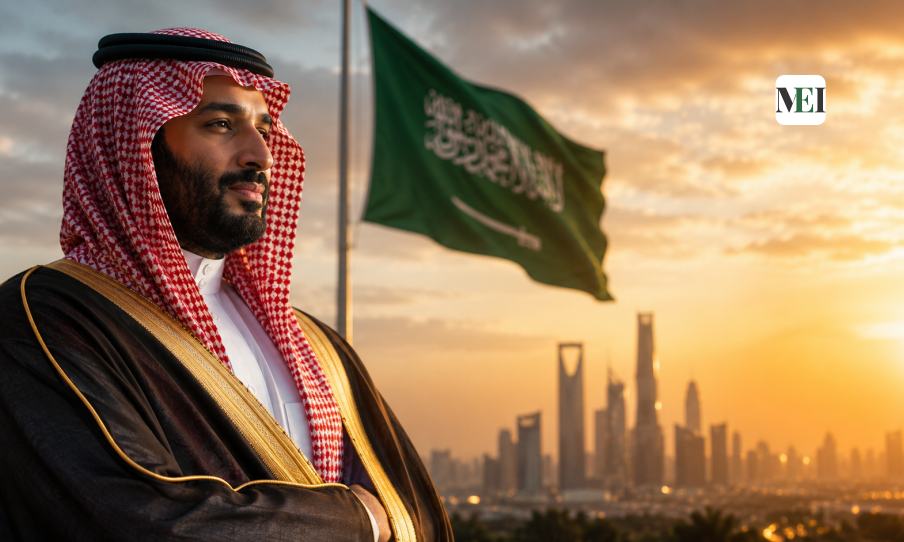
Fast changes are reshaping world politics, yet one name stands out now more than most – Saudi Arabia’s Crown Prince Mohammed bin Salman. His way of leading doesn’t follow old patterns; instead, it mixes royal tradition with sharp, business-like pushes toward new systems. Behind big shifts in economy and society sits this unique form of rule. It feels familiar in structure but moves like a startup, quick and focused on results. Anyone studying today’s Middle East must grasp its rhythm because it alters how long-standing nations adapt when everything around them accelerates. Decisions once made slowly, through layers of agreement, now happen swiftly under his influence, replacing caution with bold plans and clear responsibility.
A Cultural Shift Driven by Practical Vision
Years passed while the kingdom moved slowly, its leaders choosing caution over change to keep things steady at home. Yet when MBS took charge, old patterns cracked open through actions once thought too bold even to attempt. Old rules around daily life vanished fast – suddenly women could drive, concerts arrived, tourists followed. Power here now works differently – fast, focused on outcomes, treating openness as fuel for growth instead of risk. Shifting how people live becomes strategy, reshaping traditions so new skills cross borders into local streets. The aim? A livelier society, one that pulls outsiders in by changing what belongs inside.
This pragmatic approach is deeply intertwined with Vision 2030, an ambitious blueprint designed to reduce the nation’s historical reliance on fossil fuels. In executing this vision, the MBS leadership style mirrors the behavior of an aggressive venture capitalist rather than a typical state bureaucrat. It embraces immense risks, pours billions into futuristic megaprojects like NEOM, and demands instant execution from government ministries. Leaders who fail to meet the stringent benchmarks set by the top are quickly replaced, establishing a corporate culture of performance inside a traditional government apparatus. Consequently, this relentless drive has fundamentally shifted the internal expectations of how public policy should be formulated and delivered in the region.
The Shift Toward Corporate Public Administration
To fully comprehend the mechanics of this transformation, one must examine how the MBS leadership style handles public administration and state institutions. Historically, Saudi ministries functioned as independent fiefdoms with minimal cross-collaboration and low accountability. The modern leadership model has centralized absolute control, stripping away inefficient layers of bureaucracy to establish a direct line of command. This central element of the MBS leadership style relies heavily on top-down directives backed by sophisticated data tracking and key performance indicators. Government officials no longer simply manage portfolios; they are expected to hit precise targets that align directly with the overarching national strategy.
This restructuring has effectively turned the state into a massive corporation, with the Crown Prince acting as the ultimate chief executive officer. While this consolidation of authority allows the government to bypass gridlock and implement massive infrastructure projects at an unprecedented pace, it also places immense pressure on the entire civil service. The MBS leadership style leaves very little room for dissent or bureaucratic foot-dragging, creating an environment where speed is prioritized above all else. This hyper-efficient administration model has successfully revitalized stagnant sectors, from mining to digital gaming, proving that a centralized authority can achieve rapid industrial diversification when guided by a singular, unyielding will.
Redefining Regional Diplomacy and Foreign Relations
The impacts of this transformation extend far beyond domestic policy, altering how the kingdom projects its power across the globe. In international affairs, the MBS leadership style is characterized by an assertive, transactional approach that boldly prioritizes national interests above traditional alliances. Gone are the days of quiet, behind-the-scenes diplomacy that defined previous administrations. Instead, the current framework embraces a fiercely independent foreign policy, establishing strategic partnerships with competing global superpowers like China and Russia while simultaneously renegotiating its historical security relationship with the West.
This assertive diplomatic stance reflects a deeper confidence stemming from economic self-reliance and geopolitical leverage. The MBS leadership style treats international relations as a series of strategic deals aimed at maximizing domestic growth and securing regional dominance. Whether navigating complex oil production agreements through OPEC Plus or positions on regional conflicts, the decision-making process remains highly calculated and unapologetic. By positioning the nation as an indispensable economic hub and a critical geopolitical mediator, this bold methodology has forced global leaders to engage with the kingdom on entirely new terms, solidifying its role as an assertive player on the world stage.
Balancing Radical Transformation with Historic Risks
Ultimately, the grand experiment taking place within the kingdom serves as a fascinating case study in modern authoritarian governance. The MBS leadership style has undeniably achieved historic milestones, fundamentally altering the daily lives of millions of citizens and steering a massive economy toward a post-oil future. By combining social progressivism with rigid political centralization, it challenges Western assumptions that economic modernization must always go hand in hand with liberal democracy. This unique synthesis demonstrates that a determined leader can dismantle deeply entrenched societal norms and revitalize a nation through sheer political will and immense financial resources.
However, the long-term sustainability of the MBS leadership style remains an open question for economists and political scientists alike. The sheer speed of the reforms and the massive financial bets placed on unproven megaprojects carry substantial economic risks if global markets fluctuate. Furthermore, the intense centralization of authority means that the success of an entire nation rests heavily on the vision and execution of a single individual. As the kingdom moves closer to the realization of its Vision 2030 goals, the world will continue to watch how this intense, disruptive approach navigates the complex challenges of the future, permanently altering the playbook for national leadership.