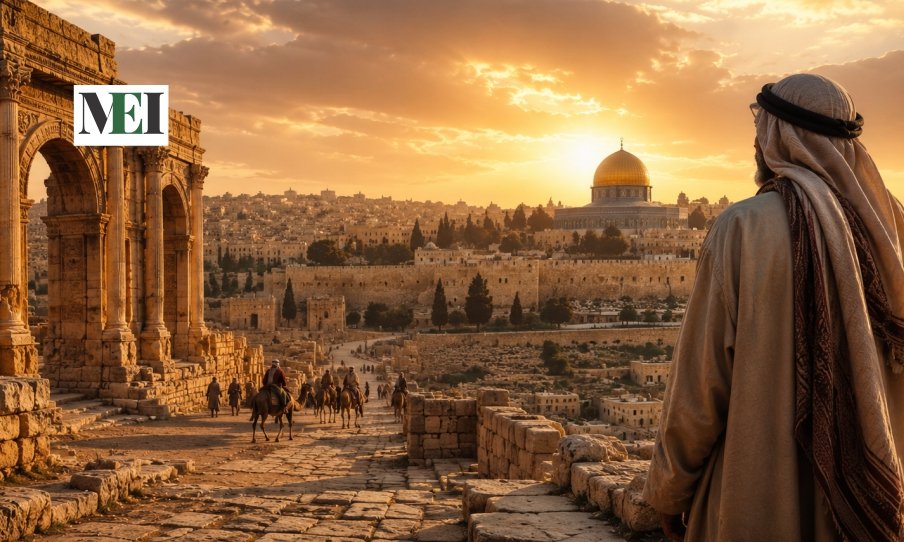
Out here, where deserts meet mountains and seas, people first built cities that lasted. Following ancient paths through the Middle East uncovers lives shaped by early farming, laws written in stone, traditions still felt today. Connected by land bridges between Africa, Asia, Europe, it pulled ideas inward – then sent them outward again. Look closely at old inscriptions, ruined temples, caravan trails worn deep, and you see waves of change born in this place spreading slowly elsewhere. Understanding how nations now relate means tracing echoes of empires long gone but never fully silent.
The Dawn Of Innovation And Early Empires
Out past the wandering years, people settled down when farming took root – this change marks where civilization truly stirred. Along green stretches tucked between two great rivers, village life shaped new ways to live together on purpose. From these places came signs pressed into clay by Sumer hands, giving words a lasting form beyond speech. Laws held still on tablets now; stories did too, along with counts of grain and trade. That act of marking meaning paved silent roads ahead for others who ruled wide lands later – the Babylon kind, then Assyrian ones – to build control through written orders passed across distances. The quiet trace of inkless script became something rulers leaned on.
Centuries rolled on, bringing complex laws like Hammurabi’s code – rules carved into stone that shaped how people lived and courts judged. Not just walled outposts, these cities pulsed with global trade, bold buildings rising where dust once swirled. Water channels snaked across dry ground, turning barren stretches into fertile fields feeding thousands. From market lanes to council halls, order spread quietly, planting ideas about justice and city life deep into future civilizations.
The Convergence of Major Spiritual Movements
Beyond its achievements in governance and engineering, the territory stands out as the birthplace of major monotheistic spiritual traditions. A comprehensive examination of middle east history requires a deep look at how Judaism, Christianity, and Islam consecutively emerged from these arid terrains, each profoundly altering the course of human philosophy. These spiritual movements introduced groundbreaking moral concepts that challenged old polytheistic frameworks, replacing them with a singular, universal moral order. The sacred geography of this zone quickly transformed into a shared space of deep devotion, creating a landscape permanently etched with holy sites that attracted millions of pilgrims across the centuries.
The profound middle east history synthesis that followed the rapid spread of Islam in the seventh century created an unprecedented era of widespread connectivity. A single shared language and a unified legal framework suddenly linked disparate communities from North Africa all the way to Central Asia. This spiritual and linguistic unification did not isolate the region; instead, it opened up vast intellectual pathways, turning ancient desert cities into flourishing epicenters of philosophical debate, artistic expression, and cross-cultural dialogue that continuously redefined the spiritual boundaries of the medieval world.
The Brilliant Golden Age of Scholarly Achievement
During the European medieval period, the region entered a phase of remarkable intellectual brilliance, marking a glorious chapter in middle east history. Under the patronage of forward-thinking caliphates, centers of learning like Baghdad’s House of Wisdom became magnets for scholars of diverse backgrounds. Thinkers systematically translated, analyzed, and expanded upon classical Greek, Persian, and Indian texts. This massive preservation effort ensured that fundamental scientific and philosophical knowledge survived, while local scholars pushed far past the limits of ancient understanding to make their own groundbreaking discoveries.
Remarkable breakthroughs occurred in various scientific fields, including mathematics, medicine, and astronomy. Scholars like Al-Khwarizmi pioneered algebra, a word directly derived from Arabic text, while medical pioneers like Ibn Sina compiled comprehensive encyclopedias that served as the standard medical textbooks in European universities for hundreds of years. Observatories built across the region mapped celestial bodies with unprecedented precision, introducing navigational techniques that later enabled global maritime exploration. This vibrant intellectual environment proved that the region was a crucial intellectual bridge, actively generating and refining the foundational knowledge that sparked the global scientific revolution.
The Modern Era of Transition and Redrawn Borders
The arrival of the modern era brought profound structural transformations, signaling a complex shift in middle east history. For several centuries, the Ottoman Empire maintained a diverse, multi-ethnic administrative structure over the region, balancing various local interests under a centralized authority. However, the internal decline of the empire, combined with the intense geopolitical rivalries of the industrializing Western powers, gradually eroded this long-standing stability. The onset of the twentieth century accelerated this decline, leading to a complete dismantling of traditional administrative boundaries following the conclusion of the First World War.
The subsequent implementation of the Sykes-Picot Agreement redrew the middle east history, creating new borders that often disregarded historical, tribal, and sectarian realities. These newly drawn boundaries laid the foundation for the complex geopolitical dynamics that characterize the contemporary landscape. The discovery of massive oil reserves further amplified global interest, transforming local political transitions into matters of high-stakes international strategy. Despite these intense external pressures and internal adjustments, the nations of this region have steadily built distinct modern identities, drawing strength from their deep heritage of middle east history while adapting to the rapid economic demands of a globalized economy.
Reflections on a Vital Civilizational Anchor
Ultimately, analyzing middle east history reveals that this critical region has never been a static background to global events, but rather an active driver of human progress. From the early cuneiform tablets of Mesopotamia to the brilliant scientific advancements of the medieval golden era, the region has continuously shaped human thought, belief, and governance. Understanding this intricate narrative is not just an academic exercise in exploring the past; it is a necessary step toward decoding the complex geopolitical realities of the modern world. By appreciating the deep middle east history, currents of this vibrant crossroads, humanity gains a clearer perspective on the shared cultural and intellectual legacy that continues to unite our global society.