Transformation is rarely about technology alone. Its real test comes when a strategy has to work in practice, when processes need to become clearer, people need the right capabilities, and organizations need systems that can deliver measurable results. That is where transformation becomes a discipline of connecting different parts of a business and turning complexity into something people can act on.
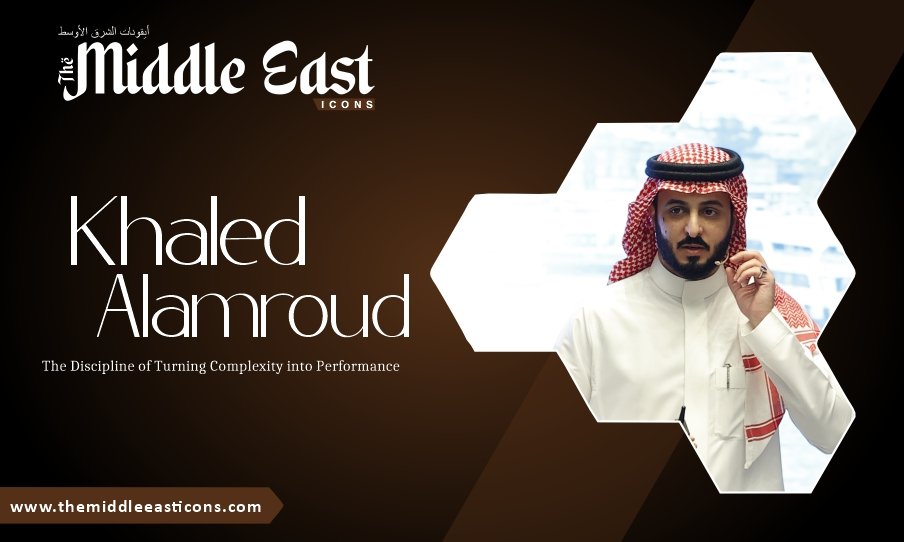
Khaled Alamroud, Founder of tawasul.com, has spent more than 18 years working across government and private-sector environments, bringing together strategic leadership and hands-on execution. His experience has taken him from improving beneficiary experience in complex Hajj and Umrah operations to transforming logistics through data, technology, and customer-focused solutions. Across these settings, his work has centred on finding practical ways to improve how organizations operate and perform.
An entrepreneurial mindset shapes the way Khaled Alamroud approaches this work. Rather than viewing strategy, people, processes, technology, and customer experience as separate concerns, he connects them as parts of the same transformation effort. His professional work has also extended into consulting and training, with experience supporting more than 84 organizations across government, private, and non-profit sectors. His areas of work have included organizational performance, innovation, procurement, and professional procurement certifications.
The common thread is a practical interest in helping decision-makers reduce inefficiencies, strengthen organizational capabilities, and create systems that can grow with the demands placed upon them. At tawasul.com, that perspective provides the foundation for a leadership journey centred on turning ideas into structured performance and sustainable impact.
A Career Shaped in the Field
Khaled Alamroud’s professional journey began where logistics is experienced most directly: in the field. Founding Tawasulkom Logistics Services gave him an early understanding of how operations, people, timing, and decisions come together in real working environments. Over more than 18 years, his experience has extended across operations, logistics, supply chains, leadership, planning, institutional excellence, consulting, and capability building.
One of the defining chapters of that journey has been his involvement in Hajj and Umrah operations for 19 seasons. Managing these seasons exposed Khaled Alamroud to some of the most complex logistical and operational conditions, where meticulous planning and coordination must come together across numerous entities and responsibilities. What stayed with him was not only the scale of the work, but the importance of enabling millions of pilgrims and visitors to undertake their spiritual journeys safely, smoothly, and with peace of mind.
Those experiences changed his understanding of leadership. Management, he learned, is not always about plans, meetings, and reports. In the field, time can be limited, circumstances can change rapidly, and thousands of beneficiaries may depend on a decision made at precisely the right moment. That environment taught him the value of decisive leadership, operational agility, and integrated teamwork.
His education followed a similarly broad path. Khaled Alamroud studied law and regulations, leadership, and executive management before moving into data science and advanced artificial intelligence. The combination allowed him to connect people, systems, management, and technology rather than viewing complex challenges from a single perspective. His conviction is clear: knowledge creates value only when it can be transformed into decisions, execution, and measurable impact.
Looking Beyond the Shipment
The idea behind Tawasulkom Logistics Services grew from everyday questions within logistics. Khaled Alamroud began looking beyond the basic movement of a shipment and toward the details surrounding the entire journey.
When does the customer actually need the delivery? Is the route being used the most efficient one? Are available data being used effectively? Why are some vehicles travelling distances that could be reduced? How can the customer experience become part of the operation rather than something considered only at the end?
Those questions led him toward a different model. Instead of designing a logistics service around the vehicle or shipment alone, he wanted to place the customer, time, data, and value at the centre. That thinking became the basis for developing logistics services that use technology, data, and operational planning to improve efficiency while also improving the customer experience.
The approach also shaped his understanding of innovation. Khaled Alamroud does not measure innovation by how unusual an idea sounds. He measures it by its impact. An idea becomes innovative when it solves a genuine problem better, whether that means creating greater value, reducing time or cost, or improving the customer experience.
That perspective became particularly important during the early stages of entrepreneurship, when the business faced the practical challenges of execution, developing the right model, understanding market needs, and continuously improving operations. Problems, in his view, contain information. A delay reveals something about a process. A customer complaint provides insight. An unexpected outcome can indicate that the course needs to change. Agility, learning, and continuous improvement therefore became central to his leadership philosophy.
From Faster Movement to Greater Value
The original vision was straightforward: deliver a more efficient logistics service. Over time, Khaled Alamroud’s question became broader. Instead of asking only how a company could move faster, he began asking how greater value could be created from every journey, every piece of information, and every decision. Customer time windows, routes, geographic proximity, operational data, transparency, and performance measurement began to be viewed as connected elements rather than isolated considerations.
That thinking also changed his view of what will determine the future of logistics companies. He does not see the number of vehicles or warehouses as the sole measure of strength. Increasingly, the ability to turn data into better decisions will matter.
Technology itself is not the objective. Its purpose is to make services better, decisions faster, costs more efficient, and the customer experience clearer and easier.
Achievement Through Lasting Impact
Across his career, Khaled Alamroud has contributed to projects involving institutional excellence, performance improvement, policies and procedures, capability building, innovation, and entrepreneurship. His work in Hajj and Umrah remains particularly significant because of the leadership demands involved.
He also takes pride in his contribution to knowledge transfer. Through consulting and training, he has served more than 84 organizations and delivered more than 3,400 training hours. Yet his definition of achievement has evolved over time.
A completed project or a numerical target is no longer enough to define success. What matters more to Khaled Alamroud is what remains after direct involvement ends: a process that becomes better, a stronger team, a leader who becomes more capable of making decisions, or a system that continues improving without depending on the person who initiated the change.
This perspective also informs how he approaches transformation. He starts with a basic question: what is the real problem being solved? From there, he examines the current state, data, processes, customer or beneficiary experience, and strategic objectives, looking at how they connect across the value chain.
Improvement must have a visible effect. Has time been reduced? Has waste been lowered? Has spending become more efficient? Is decision-making faster and more accurate? Has productivity improved? Has risk decreased? Has the beneficiary experience become better?
Without measurable value, transformation remains incomplete.
Supply Chains in an Uncertain Environment
Khaled Alamroud identifies uncertainty as one of the defining challenges facing supply chains. Technological developments, geopolitical and economic shifts, and changing customer expectations are altering the environment in which supply chains operate. Lowest possible cost is no longer sufficient as the sole objective.
He sees a need for greater resilience, stronger visibility into data, diversified sources, closer supplier partnerships, and the ability to respond more quickly. At the same time, he sees opportunities through strategic collaboration and the intelligent use of artificial intelligence, predictive analytics, automation, and digital platforms.
That shift changes the definition of success. Rather than focusing simply on the lowest cost, Khaled Alamroud sees the future moving toward the best sustainable value.
The distinction is important. Cost remains relevant, but it cannot be separated from resilience, efficiency, customer needs, partnerships, and long-term impact.
Sustainability Inside the Operation
Khaled Alamroud does not view sustainability as a separate initiative or an annual report. He sees it as something embedded in everyday decisions. Optimizing routes and eliminating unnecessary journeys can improve efficiency while reducing waste. Developing local suppliers can strengthen economic capability rather than simply satisfying a procurement objective. Simplifying a process can save time, cost, and resources simultaneously.
The strongest sustainability models, in his view, connect economic value, operational efficiency, responsibility, and long-term impact instead of treating them as separate agendas.
That approach reflects his wider belief that operational decisions should be judged by the value they create over time, not only by the immediate result.
AI Must Change the Business
Khaled Alamroud is highly optimistic about artificial intelligence, but he draws a clear distinction between using AI and achieving transformation. The question is not whether an organization is using AI. The more important question is what changed after implementation. Has demand forecasting become more accurate? Has unnecessary inventory decreased? Has supplier selection improved? Have routes become more efficient? Is decision-making faster? Has waste fallen? Has the customer experience improved?
If those effects cannot be measured, an organization may simply have added new technology to an old way of working.
Khaled Alamroud sees the future in the combination of human judgment, data, and artificial intelligence. Machines can process extraordinary volumes of information at speed and identify patterns across data. People, however, bring something different: leadership through example, behaviour, values, and purpose. His conclusion is direct: AI that does not create measurable impact may represent new technology, but it is not necessarily transformation.
Saudi Arabia’s Expanding Possibilities
Khaled Alamroud sees the future of supply chains and entrepreneurship in Saudi Arabia through the wider transformation initiated by Saudi Vision 2030. He points to the Kingdom’s expanding partnerships across security and defence, innovation and technology, climate and renewable energy, investment, entrepreneurship, supply chains, and logistics.
Saudi Arabia’s geographic position connecting three continents has strengthened its potential as a global logistics hub, supported by international trade corridors and major air, sea, and land connectivity initiatives. Since Vision 2030 began, Khaled Alamroud has witnessed significant development in infrastructure and logistics services, digital transformation, local content, human capital, investment, and entrepreneurship.
What interests him most, however, is the collaboration behind the transformation. Government entities, the private sector, investors, entrepreneurs, and national talent are working around clearly defined ambitions.
Khaled Alamroud identifies Crown Prince Mohammed bin Salman as his greatest source of inspiration, particularly because he sees Saudi Arabia’s transformation under his leadership as an example of turning vision into reality and redefining what is possible. As Khaled Alamroud reflects on this leadership and its impact on the nation, he expresses his admiration: “Therefore, we proudly say with great pride and admiration: A leader who inspired a nation, and a nation that now inspires the world.”
That change in perception is significant to Khaled Alamroud . He believes global competitiveness is increasingly seen not as a distant ambition, but as something within reach when vision, determination, and execution come together. His own contribution, he hopes, can extend that spirit by working toward what is possible and leaving an impact that encourages others to shape the future.
Twenty Minutes That Tested Leadership
One of the experiences that most influenced Khaled Alamroud’s leadership philosophy occurred during a Hajj season. A large number of pilgrims’ buses arrived at a camp within a very short period, creating immediate pressure on accommodation and directly affecting the beneficiary experience. The issue was not a lack of resources. The challenge was responding quickly, making the right decision, and reducing waiting time.
Within less than 20 minutes, the team redesigned the process. Responsibilities were redistributed among bus supervisors, who were empowered with clear procedures and instructions. Each pilgrim was precisely linked to an assigned location based on the letter and number displayed on the pilgrim card. The accommodation process was simplified to reduce congestion, luggage handling was organized for faster movement, and SMS communication was activated to provide immediate guidance.
The result was substantial. Waiting time was reduced to approximately nine minutes for the accommodation of 1,800 pilgrims, operational flow was restored quickly, and the beneficiary experience improved in an extremely high-density environment.
The experience reinforced a lesson that remains central to Khaled Alamroud ’s approach: operational transformation does not always begin with additional resources. Sometimes it begins by redesigning the experience, empowering the team, and applying the right intelligent solution at the right moment.
Four Principles Behind Strong Teams
Khaled Alamroud’s approach to high-performing teams rests on four principles: clarity of purpose, empowerment, accountability, and continuous learning. He wants people to understand why they are doing the work, not simply what they are expected to do.
Empowerment, in his view, must include the authority to act. Asking people to take responsibility without giving them the ability to make decisions is not genuine empowerment.
Accountability provides the necessary balance. Empowerment without accountability does not create sustainable performance, while innovation cannot flourish where people are afraid to experiment. Thoughtful experimentation should be allowed, and mistakes can become learning opportunities. What should not be accepted is repeating the same mistake without learning from it.
A Future Beyond Traditional Supply Chains
Khaled Alamroud’s priorities for the coming years are connected to a concept he is developing: “From Supply Chains to Value Ecosystems™.” He believes the traditional boundaries between customers, suppliers, employees, technology, data, partners, and regulators are becoming less distinct. Increasingly, each is part of one interconnected ecosystem.
His proposed value ecosystem consists of seven interconnected elements: Purpose & Strategy; People & Leadership; Procurement & Partnerships; Operations & Execution; Data & Artificial Intelligence; Performance & Excellence; and Resilience & Sustainability.
At its centre is sustainable value. Khaled Alamroud ’s ambition is to continue developing models and solutions that combine practical experience, institutional excellence, data, and artificial intelligence, while contributing to solutions that can originate in Saudi Arabia and compete globally.
The concept brings together many of the themes that have shaped his career: field experience, operational discipline, data, technology, people, learning, and measurable impact.
Start With the Problem
Khaled Alamroud’s advice to emerging entrepreneurs and professionals begins with a warning against starting with technology. His view is simple: start with the problem. Rather than becoming absorbed in creating something technologically sophisticated, he believes entrepreneurs should first make sure they are solving a genuine problem. That requires getting closer to the customer, going into the field, understanding the process personally, and learning how to read data. He also believes entrepreneurs must be willing to change their ideas when reality tells them something different.
Team building is equally important. Khaled Alamroud advises emerging leaders to build a team, not followers. The goal should be to develop people who can make decisions, take responsibility, and potentially become better than their leader in particular areas. An organization should never become dependent on one individual’s personal presence.
His own desired legacy follows the same line of thinking. He wants to contribute, even in a small way, to changing how business is understood: from managing resources to creating value, from executing processes to creating impact, and from optimizing supply chains to developing integrated value ecosystems.
At the heart of that philosophy is a simple idea: every resource should ultimately be transformed into value.
For Khaled Alamroud, that is also the responsibility of the next generation of leadership. Knowledge, technology, infrastructure, data, people, and opportunity matter most when they are connected to decisions, execution, and an impact that can be measured and sustained.