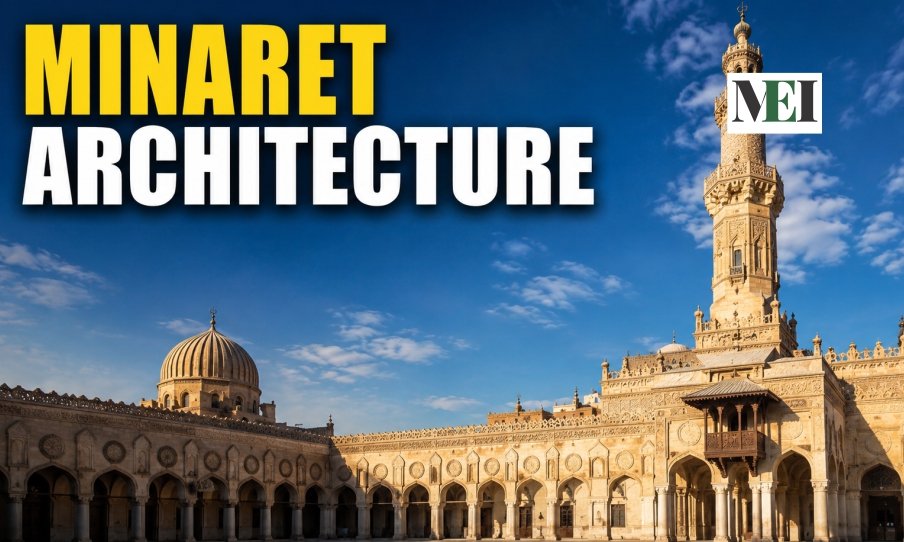
High above old cities everywhere stand tall shapes stretching up without hurry. Not just breaking through sky layers but whispering tales of people long gone who built with clever hands. Look close at Muslim-built towers and one thing stands clear – their form carries weight beyond stone. Built first so voices could rise with prayers, they soon grew into bold marks seen from far away. Watching them change over time shows quiet links between numbers carved in design, belief held deep inside, and art shaped by earth and hand.
The Early Days of Sacred Towers
Back then, places for prayer had no tall towers at all. Calls rang out across neighborhoods from house tops or short barriers instead. As towns grew larger, voices needed help reaching further. So builders began looking around – watching old Roman lookout posts, studying church spires rising above villages nearby. Ideas mixed slowly: everyday practices met fresh purpose. What emerged wasn’t rigid but ready to shift shape whenever required. These early steps shaped how minarets later stood – not just high up, but rooted in practical thought.
Over time, those towers took on more roles than just sound. Not only did they carry voices across space, but they also stood like beacons – seen far off by people moving toward towns through open land. When someone crossed wide stretches of sand, a shining spire would catch the eye well ahead of any walls or homes. Because of this visibility, makers focused sharply on strength and height when building them up. Their need to do two jobs at once pushed designs forward, turning what was once basic into something detailed, expressive, shaped by local pride.
Regional Variations Shaping Striking Visual Profiles
As Islamic civilization spread across diverse landscapes, builders gracefully adapted their construction methods to utilize local materials and match regional aesthetic expectations. This adaptation created unique visual styles that allow historians to instantly identify where a tower was built simply by looking at its silhouette. In North Africa and Spain, for instance, the Moorish style favored robust square towers decorated with intricate tile work and complex geometric brick patterns. These heavy, imposing structures offered a stark contrast to the styles developing simultaneously in the eastern Mediterranean.
Moving further east into Anatolia, the Ottoman Empire revolutionized the field by introducing incredibly slender, pencil-like needles made of smooth limestone. These towering structures featured multiple balconies supported by stalactite carving, known as muqarnas, and were capped with sharp conical roofs. Meanwhile, Persian builders in Iran and Central Asia charted a completely different path, opting for massive cylindrical towers covered entirely in turquoise and deep blue glazed tiles. The stark differences between a square North African tower and a needle-sharp Ottoman spire show how malleable minaret architecture truly is when shaped by distinct cultures.
Intricate Ornamental Details And Engineering Masterpieces
Beyond the broad strokes of regional silhouettes, the true brilliance of these monuments lies in their micro-architecture and engineering. Constructing a vertical tower that could withstand earthquakes, high winds, and the relentless passage of time required exceptional mathematical precision. Master builders had to carefully calculate weight distribution, often tapering the towers slightly as they rose toward the sky to lower the center of gravity. Inside, tightly wound spiral staircases provided crucial structural reinforcement, acting like an internal spine that kept the exterior masonry perfectly stable under environmental stress.
The decorative programs applied to these surfaces were equally complex and deliberate. Because figurative art is traditionally avoided in sacred spaces, artisans relied heavily on sophisticated geometric networks, stylized floral motifs, and sweeping Arabic calligraphy. Bands of beautifully carved Quranic verses frequently wrap around the upper shafts, looking like delicate lace from a distance but revealing immense sculptural depth upon closer inspection. The ingenious placement of balconies also broken up the verticality of the shafts, offering both a functional platform for the muezzin and a perfect canvas for intricate corbeling and stone transition work.
Modern Adaptations Preserving Cultural Identity Today
In the contemporary world, the practical necessity of a physical tower for projecting the human voice has changed due to modern audio systems and digital notifications. Despite this shift, the enduring legacy of minaret architecture continues to thrive in modern design. Contemporary architects do not merely copy the past; instead, they reinterpret historic forms using cutting-edge materials like reinforced concrete, structural glass, and brushed steel. These modern interpretations strip away heavy surface ornamentation to focus on the pure, elegant geometry of the vertical line, ensuring the tower remains a vital symbol of community identity.
Today, these structures stand as beautiful cross-cultural monuments that bridge historical heritage with futuristic urban landscapes. Whether viewing an ancient brick tower in Samarkand or a sleek minimalist spire in a modern European metropolis, the core spirit of the design remains unchanged. It continues to represent an artistic bridge connecting earthly materials with soaring human aspirations. By studying how these remarkable vertical landmarks are designed and built, we gain a much deeper appreciation for a global design heritage that seamlessly marries structural engineering with timeless artistic expression.