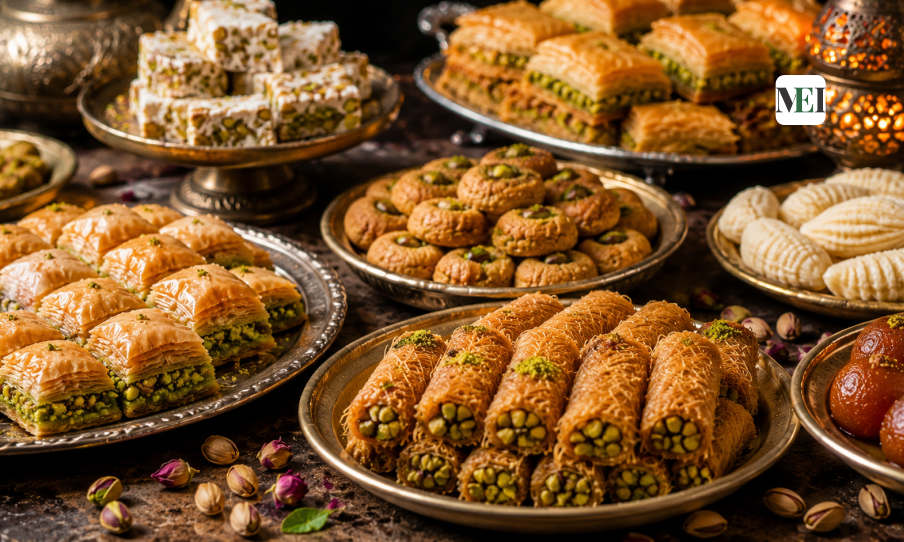
Stories of people on the move, old empires, and bonds between strangers often hide inside what we eat. Out of the Middle East comes a sweet tradition baked into centuries of giving, feasting, and warmth. Shimmering pasts, like those of Ottoman palaces, echo through sugary layers now sold in busy Beirut alleys or Amman corners. These candies appear when babies arrive, during holy months, at doors opened for neighbors without warning. Crisp pastry crackles under honeyed drips, nuts spill out fragrant and warm – such tastes travel well beyond deserts and coastlines. Each bite holds more than sugar; it carries memory folded in syrup, passed quietly hand to hand.
The Long Journey of Sugar Craft Over Time
Long ago in medieval times, people prized honey, dates, and wild nuts as rare treats. Through centuries, baking styles shifted under the quiet touch of North African, Levant, and Gulf customs. From those shifts came well-known arabic desserts, born when bakers mastered pulling phyllo so thin it nearly vanished. With steady hands, raw farm goods turned into layered creations full of detail. Then scent arrived – rosewater, made from steamed petals, along with essence drawn from orange blossoms – lifting humble mixtures into something softly perfumed. Each bite carried time, effort, a whisper of places far away. Out along old trade paths, baking secrets from Arab homes traveled into Europe and beyond, carried by merchants and migrants alike. Still now, people guard those age-old oven traditions like heirlooms passed through generations. Flavor shapes memory – crisp crusts and slow-fermented dough hold stories older than towns.
Iconic Flavors That Define Regional Hospitality
To step into a traditional Middle Eastern confectionery shop is to encounter an overwhelming variety of sights and scents. Among the stellar offerings, baklava stands out as a universal symbol of sweet artistry, featuring crisp, multi-layered pastry sheets enclosing chopped walnuts or pistachios, all thoroughly saturated with fragrant simple syrup. Another legendary creation is kunafa, a striking dessert featuring shredded dough over a mild, melted cheese filling that offers a perfect balance of savory and sweet elements. For those who prefer a cake-like consistency, basbousa provides a dense yet tender bite, made primarily from semolina and soaked heavily in citrus-infused syrup. Holiday celebrations like Eid al-Fitr or Easter are practically incomplete without ma’amoul, which are beautifully molded shortbread cookies traditionally packed with dates, walnuts, or vibrant green pistachios. These famous arabic sweets represent just a fraction of the vast assortment enjoyed daily from Beirut to Cairo.
A Perfect Symphony of Textures and Aromatic Ingredients
What truly sets these traditional desserts apart from Western pastries is the distinct choice and balance of ingredients. Rather than relying heavily on heavy creams or cocoa solids, bakers focus on the interplay between crunchy nuts, crisp doughs, and fragrant syrups. Pistachios, pine nuts, almonds, and walnuts take center stage, providing not only complex textures but also essential healthy fats and structural substance. The subtle infusion of cardamom, mastic, and floral waters provides a lingering aroma that defines the sensory experience. These famous arabic sweets are frequently engineered to balance contrasting elements, pairing the intense sweetness of simple syrup with the neutral profile of fresh cheeses or the slight bitterness of unflavored nuts. This careful harmonization ensures that even the most decadent pastries remain pleasant to consume, offering a multifaceted flavor experience with every bite.
Cultural Roles and Modern Adaptations Across the Globe
In Arab society, offering a guest a beautifully arranged platter of desserts is the ultimate gesture of welcome and respect. These famous arabic sweets play a central role during holy months, family reunions, graduation parties, and weddings, served alongside bitter Arabic coffee to balance out the sweetness. In the modern era, these ancient recipes are finding a global audience, moving far beyond regional borders to international bakeries. Modern pastry chefs frequently experiment with these traditional structures, adding contemporary twists like dark chocolate drizzles or sea salt accents. However, the foundational methods of rolling thin dough, slow-baking semolina, and infusing hot syrup into warm pastries remain unchanged. Ultimately, the lasting legacy of these famous arabic sweets lies in their ability to preserve heritage while bringing people together over a shared appreciation for culinary excellence.
Nutritional Balance and the Science of Preservation
Beyond their incredible tastes, the engineering of these traditional desserts serves a distinct practical purpose. In the historically arid climates of the Middle East, the heavy inclusion of sugar syrups, honey, and clarified butter functioned as highly effective natural preservation methods. These ingredients locked out ambient moisture and prevented bacterial spoilage, allowing pastries to stay fresh during long caravan journeys across the desert. From a modern dietary perspective, recent food science evaluations highlight that many of these desserts retain the complex carbohydrates and healthy dietary fibers inherent to their nut and semolina bases. While they are undoubtedly calorie-dense delicacies meant for special occasions, the integration of whole ingredients ensures a more satisfying structural profile than processed modern sweets. Enjoying famous arabic sweets connects modern consumers to a time when dessert preparation was a harmonious blend of survival science, artistic expression, and deep community building.
Read Also : Discovering Elegance And History Through The Global Evolution Of Minaret Architecture