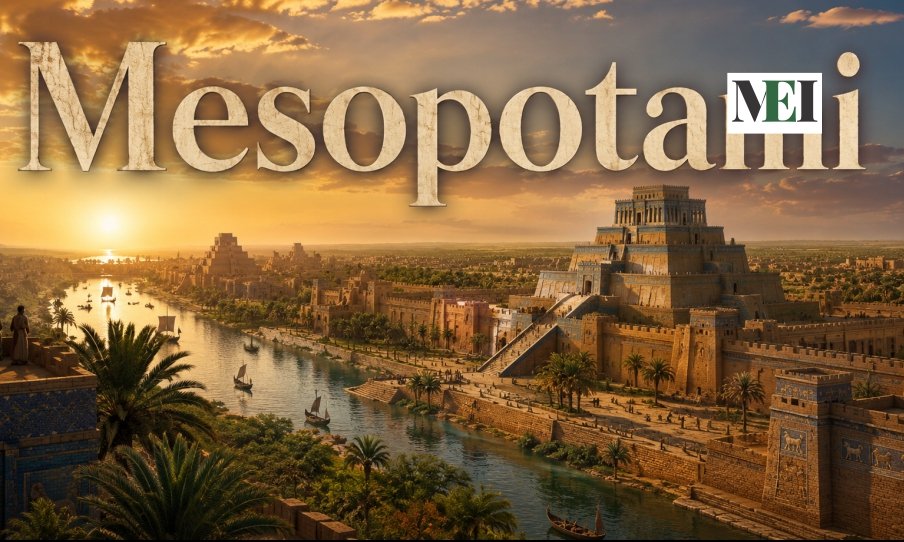
Deep in the past, Mesopotamia became a starting point for large groups of people living together in order. Between the Tigris and Euphrates, fertile land helped villages grow into busy centers where speech turned into written symbols. While time passed, these communities built ways to exchange goods, follow rules, then share knowledge across generations. Because of their work, ideas about farming, buildings, laws, even learning traveled far beyond river banks.
The First Places Where Civilizations Began
Farming found a home where two rivers met, making soil rich enough to grow food easily. Because crops thrived, families stayed put rather than moving from place to place. Slowly, clusters of homes turned into strong cities like Ur, Babylon, and Sumer.
Water management made Mesopotamian life possible, thanks to canals guiding river supply straight to fields. Because harvests grew more reliable, extra food freed many from farming chores. With time on their hands, some began shaping tools, others handled goods movement, kept records, or took up arms.
Out of city life came new forms of control. Rulers laid down rules, took resources from people, yet built forces meant to guard lands. Because of these shifts, the area became a standout among early civilizations.
How Writing Shapes Thinking
Writing began in Mesopotamia, thanks to early innovators there. Symbols pressed into soft clay marked the start of cuneiform, shaped by Sumerian hands. Because records mattered for commerce, marks on tablets grew common at first. Over time, those same signs told stories, set rules, taught lessons. From counting goods came poems, laws, schools.
Stories began to survive time because someone figured out how to write things down. Not just myths or gods but real moments too – kept safe on clay or stone instead of vanishing. From that soil rose a poem about a king named Gilgamesh, old beyond most books we know. What remains shows people then wrestled questions still ours today.
Mathematics and astronomy also advanced significantly. Scholars developed numerical systems, calendars, and methods to track planetary movements. These innovations helped improve farming cycles, architectural planning, and trade activities, strengthening the intellectual legacy of mesopotami communities.
Religion, Temples, And Social Life
Religion played a central role in daily life throughout the region. People believed that gods controlled nature, harvests, floods, and human destiny. Every city had its own patron deity, and large temples called ziggurats were constructed as places of worship and administration.
Priests held great influence because they were seen as intermediaries between humans and the divine. Religious rituals, sacrifices, and festivals were common practices aimed at gaining favor from the gods. These spiritual traditions shaped the moral and cultural values of mesopotami society.
Social structure was highly organized, with clear distinctions between rulers, priests, merchants, laborers, and slaves. Family life remained important, and laws regulated marriage, property ownership, and inheritance. Women in certain periods even possessed rights related to business and property, which was uncommon in many ancient civilizations.
Trade also contributed to cultural exchange. Merchants traveled across neighboring regions, bringing valuable goods such as metals, textiles, spices, and precious stones. This interaction expanded the economic strength and cultural influence of mesopotami kingdoms.
Architecture, Innovation, And Lasting Influence
The architectural achievements of ancient builders remain impressive even today. Massive city walls, temples, palaces, and canals reflected both engineering skill and political power. Mud bricks were widely used in construction because of the limited availability of stone in the region.
Among the most significant legal advancements was the Code of Hammurabi, one of the earliest written legal systems in history. These laws established punishments, social responsibilities, and standards of justice that influenced future legal traditions.
Technological innovation extended beyond construction and law. The wheel, improved plows, and advanced irrigation systems transformed transportation and agriculture. These inventions enhanced productivity and helped civilizations expand economically and militarily.
The influence of mesopotami achievements can still be seen in modern governance, education, urban planning, and literature. Historians continue to study this ancient civilization because it offers crucial insight into how organized societies first emerged and evolved.
Final Reflections On An Extraordinary Ancient Civilization
The legacy of mesopotami civilization continues to fascinate scholars, historians, and cultural enthusiasts around the world. Its remarkable contributions to writing, law, science, and governance shaped the course of human development in profound ways. Despite existing thousands of years ago, the innovations created in this ancient land remain deeply connected to modern life.
Understanding this civilization provides more than historical knowledge. It reveals humanity’s enduring desire to build communities, preserve ideas, and create systems that support progress. The story of mesopotami culture stands as a powerful reminder of how ancient societies laid the groundwork for the world we know today.