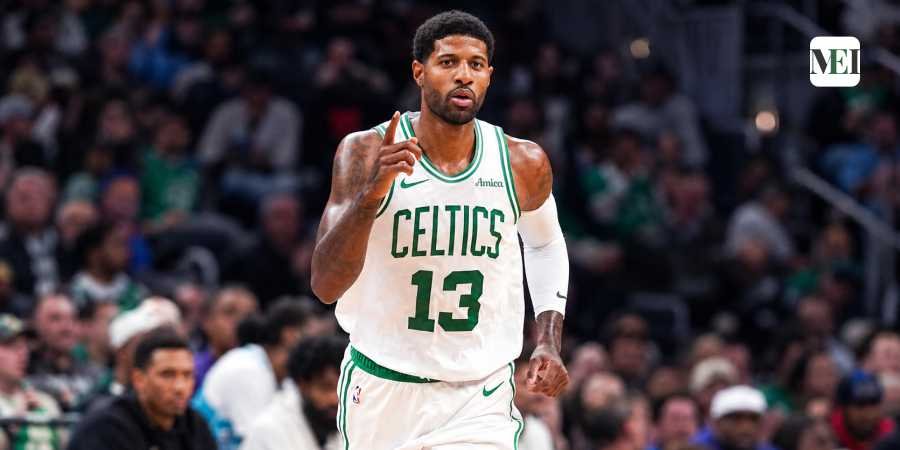
Consistency in the NBA is not simply about scoring 20 points every night. For a veteran who has spent years balancing offensive responsibility with demanding defensive assignments, it also means staying available, maintaining physical readiness, and finding ways to influence games when the shooting touch is inconsistent. Paul George has demonstrated the ability to perform at an elite level in several roles, but injuries and interrupted seasons have made continuity an important part of his story.
Now with the Boston Celtics after a July 2026 trade from Philadelphia, George enters another chapter of his career with a familiar challenge: translating his experience into dependable contributions across a full season. His combination of perimeter shooting, ball handling, length, and defensive instincts gives him several ways to help a team. The question is how consistently those qualities can be brought together as he continues his NBA career.
George’s situation is particularly interesting because his value extends beyond his scoring average. When healthy and in rhythm, he can create shots for himself, space the floor for teammates, and defend multiple types of opponents. Maintaining that two-way influence requires careful attention to workload, recovery, and the responsibilities assigned to him within a team’s system.
Paul George and the Challenge of Staying Available
Injuries have interrupted several stages of George’s career, but his first season in Philadelphia brought the issue into especially sharp focus. After signing a four-year, $212 million contract in 2024, he dealt with a left knee injury and adductor problems that limited his availability. He finished the 2024-25 regular season with 41 appearances, averaging 16.2 points, 5.3 rebounds, and 4.3 assists per game. In July 2025, he underwent arthroscopic surgery on his left knee after sustaining an injury during a workout.
These setbacks illustrate the difficulty of evaluating a player solely through individual performances. A strong game can demonstrate that the underlying skills remain intact, but a team’s season depends on whether those contributions can be sustained. Repeated interruptions can also affect rhythm, conditioning, and the time available to build chemistry with teammates.
Paul George subsequently missed the opening 12 games of the 2025-26 season while recovering from knee surgery. He then faced a separate 25-game suspension for violating the NBA/NBPA Anti-Drug Program, announced in January 2026. George acknowledged taking an improper medication while seeking treatment for a personal issue and accepted responsibility.
These circumstances matter when assessing his limited playing time that season: his absences were not attributable to injury alone.
For George, consistency therefore involves more than getting through a rehabilitation programme. It means maintaining physical readiness, rebuilding competitive rhythm after interruptions, and managing the demands of an 82-game schedule. His future contribution will depend partly on how effectively he and his team navigate those different requirements.
Why Defensive Versatility Remains a Major Asset
As players progress through their thirties, their roles often evolve. Explosive drives and constant isolation scoring may become harder to sustain over a long season, but experience, anticipation, positioning, and shooting can continue to make a player valuable. George’s defensive versatility gives him an opportunity to remain influential even when his offensive workload needs to be managed.
At 6 feet 8 inches, he has the length and mobility to defend perimeter players, contest shots, disrupt passing lanes, and switch onto different matchups when the defensive scheme calls for it. His four NBA All-Defensive Team selections reflect the reputation he established through his work on that end of the floor.
While past recognition cannot guarantee present performance, it demonstrates the range of defensive skills that has supported his career.
Paul George can also contribute without dominating possession. A well-timed rotation, a deflection, or the ability to stay in front of a dangerous ball handler may have as much practical value as a difficult shot. For a team with several offensive options, this flexibility allows him to focus on the matchups where his defensive qualities can have the greatest effect.
That adaptability could be especially useful in Boston, where his role will depend on the balance of the lineup and the needs of individual games. Rather than asking him to carry every offensive possession, the Celtics can look to use his shooting, decision-making, and defensive experience alongside other established players. The challenge will be finding the right balance between his responsibilities and the physical demands of the season.
Finding the Right Workload Without Losing Rhythm
Injury management is not simply a matter of reducing minutes. It involves balancing training, recovery, travel, practice intensity, and the demands of consecutive games. A player who receives fewer minutes may still struggle if his preparation and recovery are poorly coordinated. Equally, excessive caution can make it difficult to maintain competitive sharpness.
For Paul George, an effective approach would involve monitoring how his body responds to different workloads while preserving enough court time to develop rhythm. Medical assessments, strength and conditioning, recovery protocols, and communication between the player and coaching staff all contribute to this process. No management strategy can eliminate injury risk, but informed decisions can help teams respond to changing physical demands.
There is also a psychological dimension. Returning from an injury can require a player to rebuild confidence in movements that once felt automatic, particularly when defending quick guards or landing after contested shots. Gradually increasing demands while maintaining clear communication can help support that transition.
The objective should not be to keep George fresh at any cost. It should be to identify the conditions in which he can contribute most effectively, including when he should play, how his minutes are distributed, and when additional recovery is necessary. The appropriate plan may change throughout the season rather than follow a fixed schedule.
What His Boston Chapter Could Look Like
George’s move to Boston gives him a new setting in which to apply his experience. The Celtics acquired him from Philadelphia in July 2026 in a trade involving Jaylen Brown and future draft picks.
Such a change brings fresh expectations, a different group of teammates, and the need to establish a role within another team’s offensive and defensive structure.
His opening regular-season performance offered an encouraging glimpse of his scoring ability. On October 20, 2026, George recorded 38 points, five rebounds, and three assists against Detroit, making seven three-pointers in the contest. Boston nevertheless lost 121-113.
The performance showed that his offensive ceiling remains substantial, while the result also illustrates why one impressive individual outing cannot establish season-long consistency.
Boston will need more than isolated scoring bursts. Reliable shooting, sound defensive decisions, communication, and availability across the schedule will determine how much influence George can have. If he can contribute regularly without being asked to shoulder an excessive workload, his experience and two-way abilities could give the Celtics another valuable option.
Consistency as the Measure of His Next Chapter
Paul George’s future will be shaped by the relationship between physical readiness and the skills that have made him effective throughout his career. His shooting and defensive versatility provide a foundation, but their value depends on how consistently he can bring them to the floor and how well his role fits the team’s needs.
The coming season will offer a clearer picture of what that balance looks like in Boston. Sustained availability, efficient offence, and dependable defence would provide stronger evidence of progress than a handful of high-scoring performances alone. Equally, any assessment must recognise that injuries, recovery, and the demands of a long season can affect performance in ways that a single statistic cannot explain.
For George, the path forward is not necessarily about recreating every aspect of his prime. It is about using his experience intelligently, protecting his ability to compete, and delivering meaningful contributions within a team structure. If those elements come together, his versatility can remain a significant asset and help define a productive next chapter in his NBA career.