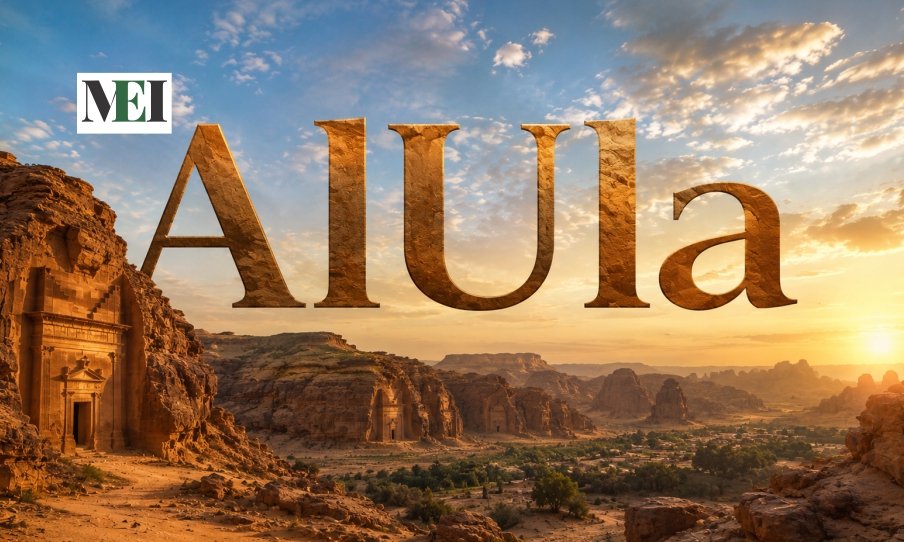
Hidden in the northwest sands of Saudi Arabia sits a wide valley where moments stretch longer than usual. Centuries passed without outsiders knowing much about it, except nomadic tribes and travelers guiding camels through dust storms. Now things shift slowly but surely. Across windswept ridges, towering stone cliffs rise beside pockets of green water and palms – like nature arranged its own exhibit. Once just a forgotten junction along old trading lanes, this place now draws quiet attention for what it holds beneath sunlit rock. Few expected such stillness could become so noticeable.
Hidden among ancient stone, time folds quietly here. People long ago shaped these cliffs with hands now gone. Their marks remain, etched where sun hits sandstone just right. Visitors arrive not chasing crowds but something older. Footsteps echo through passages worn by centuries. Beauty rises not from grand plans but slow persistence. Each curve in the rock tells of lives lived close to earth. Shapes emerge – part shelter, part symbol – that feel both distant and familiar. Movement through space becomes movement through eras. Not progress exactly, but presence. A place built not ahead, yet alongside what already was.
Whispers From The Nabataean Kingdom
Hegra shines brightest here, the oldest place in Saudi Arabia to earn UNESCO status. Long ago, around two thousand years back, it stood strong as the main southern hub for the Nabataeans. Petra in Jordan? That was built by these people too – same skilled hands, different land. Instead of tucked-away passages like Petra, Hegra spreads open under sky and sun. Tall stone forms jut up suddenly across flat ground, shaped by time and ancient tools alike.
Among the stone shapes, more than a hundred grand graves appear, shaped long ago by careful chisels. Standing apart – cut off from the rest – is the grave marked for Lihyan, son of Kuza, facing open sky and burning light. What remains surprises anyone who sees it. Years without rain, far from touch or change, kept column ridges clean, crown patterns clear, warnings above entrances sharply cut. Words etched into rock deliver raw glimpses: rules once followed, goods once traded, homes once lived in.
A Living Library Of Ancient Civilizations
Long before the Nabataeans established their southern capital, other powerful societies left their mark on the landscape. The ancient kingdoms of Dadan and Lihyan ruled the valley during the first millennium BCE, building a prosperous economy around the trade of luxury frankincense, myrrh, and spices. At the archaeological site of Dadan, visitors can observe the remains of an ancient city built entirely from stone, alongside the striking Lion Tombs carved high into the sheer cliff walls.
Just a short distance away lies Jabal Ikmah, a narrow canyon frequently referred to as an open-air library. For hundreds of years, travelers, pilgrims, and merchants passing through the valley chiseled messages into the rock walls. These inscriptions, written in early scripts like Dadanitic, Thamudic, and Aramaic, serve as an extraordinary archive. They record everything from religious offerings and local laws to simple personal notes, tracking the early linguistic evolution that eventually gave rise to the modern Arabic language.
The Maze Of The Old Town
Moving closer to the modern era, the historical journey continues through the mudbrick labyrinth of the Old Town. Founded around the twelfth century, this settlement became an essential stop along the pilgrimage route connecting Damascus to Makkah. It features an incredibly dense framework of roughly nine hundred houses and hundreds of interconnected shops, all designed to maximize shade and security for its inhabitants.
Remarkably, the Old Town remained continuously inhabited until the late twentieth century, when residents transitioned into newer neighborhoods nearby. Walking through the narrow, twisting lanes today feels like stepping directly into an active archaeological puzzle. Ongoing preservation efforts have revitalized the central market square, allowing traditional artisans to showcase local crafts, woven palm baskets, and citrus-infused goods side-by-side with modern, open-air cafes. It represents a vibrant link where old-world hospitality seamlessly meets the expectations of today’s international explorer.
Where Heritage Intersects Modern Design
While the region’s foundation rests firmly on its deep historical significance, it is simultaneously establishing itself as a global powerhouse for contemporary art and progressive design. This deliberate balance ensures that the valley is not treated merely as a dusty relic of the past, but rather as a living, breathing canvas for creative expression.
The most spectacular symbol of this cultural bridge is the Maraya concert hall located in the Ashar Valley. Holding the world record as the largest mirror-clad building ever constructed, Maraya is a true architectural masterpiece. Its exterior consists of nearly ten thousand individual mirrored panels that reflect the surrounding red sandstone mountains and vast desert sands. Depending on the time of day and the angle of the sun, the building seems to constantly shift, occasionally disappearing entirely into the landscape like a brilliant desert mirage. Inside, the venue hosts world-class musical performances, art exhibitions, and international conferences, bringing a global energy into the heart of the ancient wilderness.
The Resurgence Of The Ancient Oasis
At the physical center of all this history lies the ancient oasis, a sweeping expanse of green fed by natural underground springs. Thousands of towering date palms, citrus trees, and aromatic herbs flourish under the canopy, providing a refreshing, cool contrast to the arid desert rock formations. For millennia, this microclimate provided the vital water and sustenance that allowed complex human societies to settle and thrive in an otherwise unforgiving environment.
In recent years, local initiatives have focused heavily on ecological restoration and sustainable farming practices within the valley. Visitors can take long, leisurely strolls along elevated paths winding through the farms, learning how traditional water management techniques are being combined with modern smart-city infrastructure to protect the ecosystem. As the sun dips below the horizon, lighting up the sandstone peaks in deep shades of amber and violet, it becomes entirely clear why this valley has captivated humanity for thousands of years. It remains a timeless testament to human resilience, artistic mastery, and the enduring allure of exploration.